
My child may have additional needs
Where do I start?
You know your child best. If something doesn't feel quite right, it's okay to ask questions and seek support.
Every child develops at their own pace. However, you might notice that your child is finding certain things more difficult, or that they need additional support compared with other children their age.
You might have concerns about their communication, learning, behaviour, sensory needs, physical development or emotional wellbeing.
You don't need to know exactly what your child's needs are to start asking for help.
Did you know?
Your child does not need a formal diagnosis to receive SEN Support at school. Support should be based on their individual needs, not whether they have a diagnosis.
Your first steps
Think about what you've noticed
Start by writing down any concerns you have. Think about what your child finds difficult, when they struggle, what they enjoy and what helps them. You might also find it useful to keep notes of examples from everyday life.
You don't need a detailed report. A few notes or examples are a great starting point.
2. Speak to your child's nursery, school or college
If your child attends an education setting, speak to their teacher, key worker or Special Educational Needs Coordinator (SENCO). Explain your concerns and ask whether they have noticed similar difficulties. Discuss what support or adjustments could be put in place.
Ask what will happen next, who will be responsible and when you'll review the support together.
3. Speak to a health professional
Depending on your concerns, your GP, health visitor or school nurse may be able to offer advice, discuss your child's development or consider whether a referral to another service would be appropriate.
Take your notes with you and explain how your child's difficulties affect their day-to-day life.
4. Ask about support that can start now
Your child may benefit from additional help at nursery, school, home or in the community. This could include changes to routines, communication support, sensory adjustments or extra help with learning.
You don't have to wait for an assessment or diagnosis before discussing support.
5. Keep talking and reviewing
Arrange a follow-up conversation to discuss what's working and whether anything needs to change. If your child continues to struggle, ask what further support or assessment could be considered.
Keep copies of emails, meeting notes and any support plans so you can refer back to them.
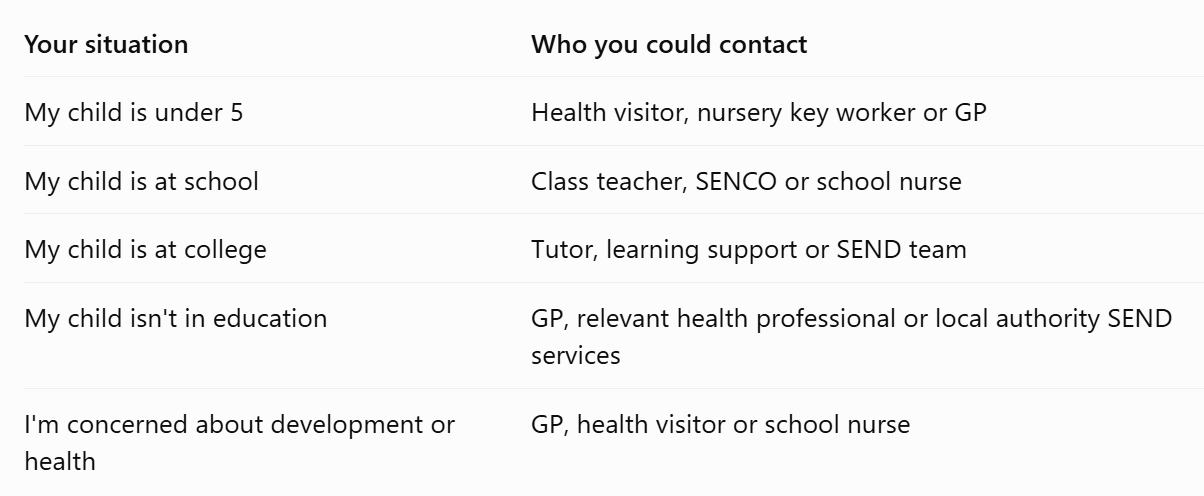
Not sure who to speak to?
Different people can help depending on your child's age and circumstances.
Preparing for your first conversation
It can be difficult to know what to say, particularly if you're not sure how to explain your concerns.
Here are some questions you might find useful.
☐ What have you noticed about my child's development or needs?
☐ What support is already available?
☐ What changes or adjustments could help my child?
☐ Do we need to involve any other professionals?
☐ How will we know whether the support is working?
☐ When can we meet again to review progress?
What happens next?
Once you've raised your concerns, your child's school or setting may suggest a plan to identify their needs, put support in place and review their progress.
This is sometimes called the graduated approach or SEN Support.
Not every child will need a specialist assessment or an Education, Health and Care Plan (EHCP). The important thing is that their needs are recognised and appropriate support is considered
Where can I find more help?
North Somerset SEND Hub (Local Offer)
Information about SEND, education, health and support services available locally.
SEND and You (SAY)
Free, confidential and impartial SEND information, advice and support for families and young people up to age 25.
Explore North Somerset SEN Support resources
NSPCWT – Parent Carer Support
Connect with other parent carers, attend peer support sessions and find information about local services.